






















The 2 February 1971 se adoptó la Convención Mundial de los Humedales en Rasmar (Irán), date that was institutionalized to commemorate this important intergovernmental treaty that serves as a framework for international cooperation and the conservation and rational use of wetlands and their resources.
There are 35 wetlands in La Guajira, Among the most important are La Laguna Salá, Tomarrazón Swamp, Canaverals Wetland, Shrimp Lagoon, Laguna Grande and the Buenavista Swamp.
In La Guajira, Wetlands play an important role and are habitat for at least 68 species of aquatic birds among which are 43 migratory species in some sectors, They also represent important tourist and recreational possibilities., included, Fishing, bird watching and nature photography.
Currently these ecosystems face different anthropogenic threats that endanger their dynamics.. To ensure its conservation, Regional Autonomous Corporation of La Guajira, Corpoguajira, has developed actions contemplated in its Action Plan, which include the preparation of the POMCAS, the diagnosis of associated wetlands in order to review existing information and update its inventory. Likewise, works associated with coastal wetlands have been carried out through agreements with different NGOs., for the development of coastal lagoon plans and mangrove management unit.
In the specific case of Laguna Salá, taking into account the high degree of contamination of this wetland, through the Corpoguajira Environmental Education Group, Meetings are being held with the communities of the Camilo Torres and María Eugenia neighborhoods, which are part of this ecosystem, to homogenize the concepts of the importance of wetlands the criteria to determine the types of zoning, from compiled knowledge, the experiences and aspirations regarding their territory generated in the social construction of the areas of environmental preservation and protection, recovery and sustainable production with its different types of uses with marked potential for consolidation, among which can be cited: Fishing, water regulation, nutrient cycling, habitats and resources for wildlife, landscape beautification and recreation, object of studies and research, climate regulation, genetic resources, and the historical heritage in memory of Admiral Padilla.
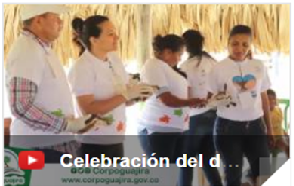
Corpoguajira's contribution to the partial solution that crosses the lagoon is important, in relation to the problem of eutrophication with the contracting of activities for the removal of guinea grass, for normalization of water flow, the repair of the protection mesh and the implementation of community cleaning days for the environmental recovery of this sanctuary of independence and biodiversity, heritage of the Riohachero people.
Wetlands have become essential to obtain drinking water in the long term. Therefore, They have been renamed "kidneys of the planet", for carrying out natural filtration processes, They not only beautify coasts, cities or mountains, its function in nature is essential: maintain life in a privileged ecosystem.
Leave a reply
I am sorry, you should be connected to post a comment.