































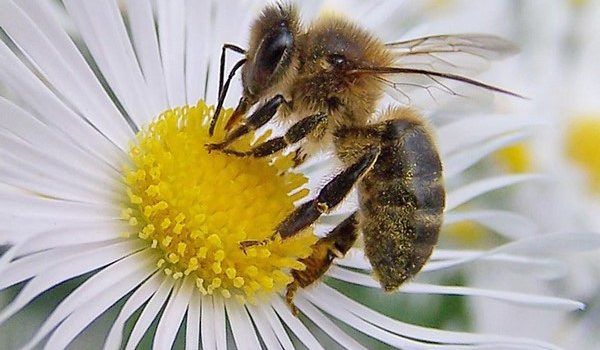
Being the biggest pollinators worldwide, the United Nations Organization, he said 20 May as World Day of the Bees, since their contribution promotes plant life, It is the first in the food chain.
Various environmental problems caused by humans are endangering the populations of this species, and thereby, agricultural and plant diversity. The invading insects, pesticides, the change in land use and practice of monoculture, reduce available nutrients and pose a threat to bee colonies; It is therefore essential to protect the species.
Corpoguajira as an entity responsible for preserving the species of fauna and flora in their jurisdiction, forward environmental education in different parts of the department to recommend to the people what to do when having a honeycomb near human reach.
Do all bees produce honey?
No, There is a species of bees, la Apis mellifera, It is the honey produced from the nectar of flowers. There is a discipline called beekeeping, whereby a group of experts keep bees and sell the honey which they produce.
How many types of bees exist?
Bees live in colonies built by 3 types of individuals: reina, workers and drones; Nevertheless, Most bees are solitary, i.e., not forming swarms. There are also semisocial species, with ability to form colonies; for example, bumblebees.
How to avoid bee stings?
- Not to disturb the bees by throwing water, stones and other blunt objects, as doing the swarm dispersed.
- Do Not Disturb smoke or candela as some bees die and those left alive try to defend themselves, It is what we categorize as aggression.
- Close off the area while when the pickup reaches or presence makes a technician with the appropriate equipment.
- It is recommended to collect the bees at night to avoid contact with the population.
- Keep children away to avoid fatal consequences, in the case of AHB can cause nervous shock and death foregoing.
What to do when stung by bees?
- Go to the point of health as soon as possible.
- Remove stingers careful not to squeeze the venom sac.
- Use ice or cold cloths local.
- Avoid scratching or rubbing, This contributes to the spread of poison.
- No use alcohol, this increases the reactions Poison.
Bees and Green Business
The Corporation has led projects aimed at keeping production bee, with which they have been delivered as hives as retraining for those working with wildlife threatened.
With this type of project contributes to the conservation of the species, improving the quality of life of communities and economic development of the region.
Today Corpoguajira, comes the call of citizenship by removing the honeycombs and handing them over to the PAICI Integral Farm Cerrejón to be delivered to indigenous communities by creating jobs and preserving the life of bees.
Leave a reply
I am sorry, you should be connected to post a comment.