


















FUNDAMENTAL SOCIAL PARTICIPATION IN THE CONSERVATION PROCESSES OF THE DRY FOREST IN DIBULLA
By: Maria Angelica H Egurrola.
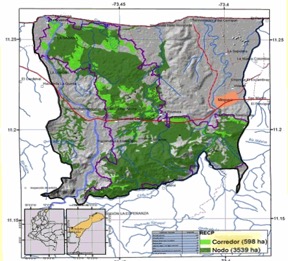
CORPOGUAJIRA and the United Nations Development Program –UNDP execute the project “Sustainable use and conservation of biodiversity in dry ecosystems to guarantee the flow of ecosystem services and mitigate deforestation and desertification processes” especially in the Dibulla area.
Natural heritage, implementing partner of this project, based on a broad participatory process, has carried out the respective studies and analyzes, so that, together with CORPOGUAJIRA and the local communities, the zoning of the forest is established and the strategies for its conservation are determined..
The field experiences carried out by Natural Heritage and CORPOGUAJIRA, show that between the period of 1985 a 2015 (30 years old), The process of forest disappearance in this area has been accelerated: Of 829 hectares of the flooded forest in the year 1985, today there are only 400 hectares.
The dry forest that stops for the year 85 covered an area of 5661 hectares, For this date, it reports a loss of 37% (1716 Ha). This dry forest of Dibulla, houses the 49% of bird species recorded for the Caribbean (405 species), However, the plant richness is low, limited by environmental conditions but accelerated by anthropogenic intervention.
They could register 56 flora species belonging to 37 plant families. With the purpose of carrying out a participatory identification of fauna and flora species important for conservation due to their biological importance or their use value for residents., Natural heritage, the Alexander von Humboldt Institute and CORPOGUAJIRA, Yesterday they held a workshop with local communities.
Leave a reply
I am sorry, you should be connected to post a comment.