
























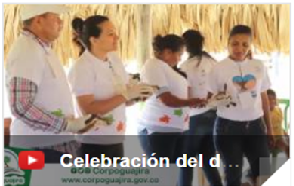




The activity was led by Corpoguajira, Conservation International Colombia and the Mayor's Office of Dibulla
 About 50 fishermen from Punta de los Remedios, Mingueo and Palomino, received a series of workshops on the control and management of the invasive species lionfish. The activity was led by Corpoguajira, Conservation International Colombia and the Mayor's Office of Dibulla.
“Our fishermen are key in this training process, since due to their activities they have direct contact with this invasive species that feeds mainly on other fish, competing with native species for food and space., causing alteration in the structure and composition of the communities that inhabit the reefs and seagrasses.", explained Samuel Lanao Robles, General Director of Corpoguajira.”
The trainings were directed by Juan Pablo Caldas, Director of Sustainability and Marine and Coastal Resources, of Conservation International Colombia, who explained that this species known scientifically as Pterois volitans, It is a fish native to the Indo-Pacific. “It is known as the first invasive marine fish that in a short time reached a wide geographical distribution from the western Atlantic and the greater Caribbean., what it shows
“its rapid ability to invade new coastal systems”, added.
It should be noted that the participants in this training cycle received a complete guide on the appropriate techniques and tools for extracting lionfish., which causes the decrease in biodiversity, affecting the food chain in reefs, commercial fishing and tourism.
Corpoguajira and Conservation International Colombia, They will continue to carry out this type of actions within the framework of an alliance signed to implement work aimed at environmental preservation and biodiversity., as well as strengthening local communities.
Similarly, Both entities will develop conservation projects aimed at the sustainable use of marine and coastal resources, involving the population to promote sustainable management strategies of strategic ecosystems and key species.
Leave a reply
I am sorry, you should be connected to post a comment.